Questions to Help You Learn About People
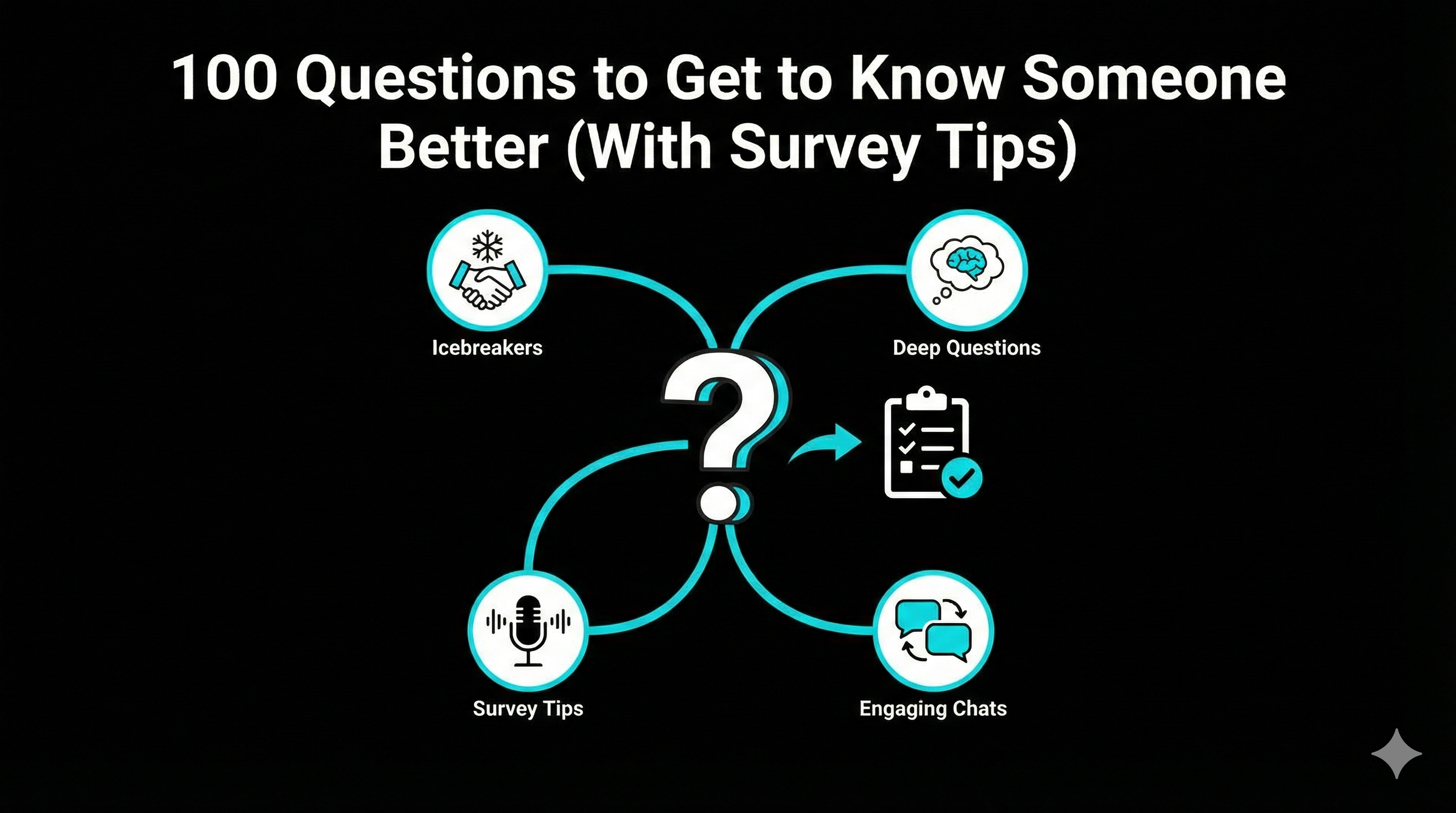
When you’re trying to connect with someone—whether it’s a new colleague, a potential friend or your own team—questions can break the ice and open deeper conversations. Good questions uncover shared experiences, reveal unique perspectives and build trust. In surveys, thoughtful questions increase response rates and generate richer data. In casual settings, they turn small talk into meaningful dialogue. This guide offers a mix of fun, quirky and serious prompts you can use in conversation or incorporate into your next survey.
Why questions matter
Conversations often start with surface‑level questions (“Where are you from?”), but real connection comes from asking things that show genuine curiosity. Research shows that people who ask follow‑up questions are perceived as more likeable and that open‑ended questions lead to longer, more enjoyable conversations. In surveys, clear and engaging questions reduce drop‑off rates and improve data quality. Our help article on the benefits of surveys explains why well‑designed questionnaires deliver more actionable insights than casual conversations alone.
Categories of questions
Here are several categories of questions you can use to get to know someone better:
Icebreakers
These are light prompts designed to ease tension and make people comfortable:
- What’s the last book you read or show you watched that you would recommend?
- If you could travel anywhere tomorrow, where would you go and why?
- What’s your go‑to comfort food?
Icebreakers are great for team meetings or workshops. They work well in online forms because they invite respondents to share something personal yet low‑stakes.
This or that questions
Sometimes you want quick, playful answers. A this or that format asks people to choose between two options (e.g. “Coffee or tea?”). It works well in polls and can lead to lively discussions about preferences. Our blog on Fun This or That Questions offers dozens of creative pairings you can try.
Reflective questions
These prompts encourage people to think deeply about their values and experiences:
- What’s a lesson you learned this year?
- Who has influenced you the most in your career or personal life?
- What’s something you’re proud of that most people don’t know about?
Use reflective questions sparingly in surveys—too many can cause fatigue—but they can add depth when used strategically. When you analyse open‑ended responses, you’ll discover patterns in attitudes and motivations. For tips on analysing qualitative feedback, see our FAQ How do I analyse open‑ended responses in an employee engagement survey?.
Goal‑oriented questions
If you’re leading a project or onboarding a new team member, ask questions that reveal goals and expectations:
- What are you hoping to learn in the next six months?
- What does success look like for you in this role?
- How do you prefer to receive feedback?
These questions not only help you understand a person’s mindset but also clarify how you can support them. They can also be adapted into survey items for employee engagement or customer success programs.
Crafting effective survey questions
When converting conversation starters into survey questions, keep these guidelines in mind:
- Be clear and concise. Avoid jargon and ambiguous language. Respondents should understand what you’re asking without needing clarification.
- Ask one thing at a time. Double‑barrelled questions like “How satisfied are you with our product and customer service?” can confuse people because they combine two topics.
- Use balanced rating scales. If you’re asking for opinions, provide equal numbers of positive and negative options (e.g. “Very dissatisfied,” “Dissatisfied,” “Neutral,” “Satisfied,” “Very satisfied”).
- Avoid leading questions. Don’t frame questions in a way that nudges respondents toward a particular answer (“Don’t you agree that…”). Neutral wording produces more honest feedback.
For more ideas on creating effective survey questions, especially for employees, check out our FAQ Employee engagement survey questions. That article lists sample questions you can adapt for different contexts.
Using questions to build trust
Whether in person or through a form, questions can demonstrate empathy and foster trust. If you’re building a team, incorporate a mix of light and thoughtful questions in your onboarding process. If you’re conducting research, explain why you’re asking for information and how the responses will be used. When people feel respected and see that their input matters, they’re more likely to open up.
Remember, too, that questions aren’t just about gathering data. They’re also about listening actively. When someone answers, follow up with curiosity (“Tell me more about that,” “What led you to that decision?”). In a survey context you can’t ask follow‑ups on the fly, but you can include optional open‑ended fields where respondents can expand on their answers.
Putting it all together
Thoughtful questions are the foundation of strong relationships and useful surveys. By mixing icebreakers, reflective prompts, playful this‑or‑that choices and goal‑oriented questions, you can create conversations and questionnaires that engage people and reveal meaningful insights. Use the examples above as inspiration for your next team meeting, networking event or survey project. And if you’re looking for a tool to build beautiful forms and collect responses automatically, our comparison of poll‑making tools in Choosing the Right Poll Maker can help you find the platform that fits your needs.